The Jolly Roger of H.M.S. Stubborn
June 28, 2026
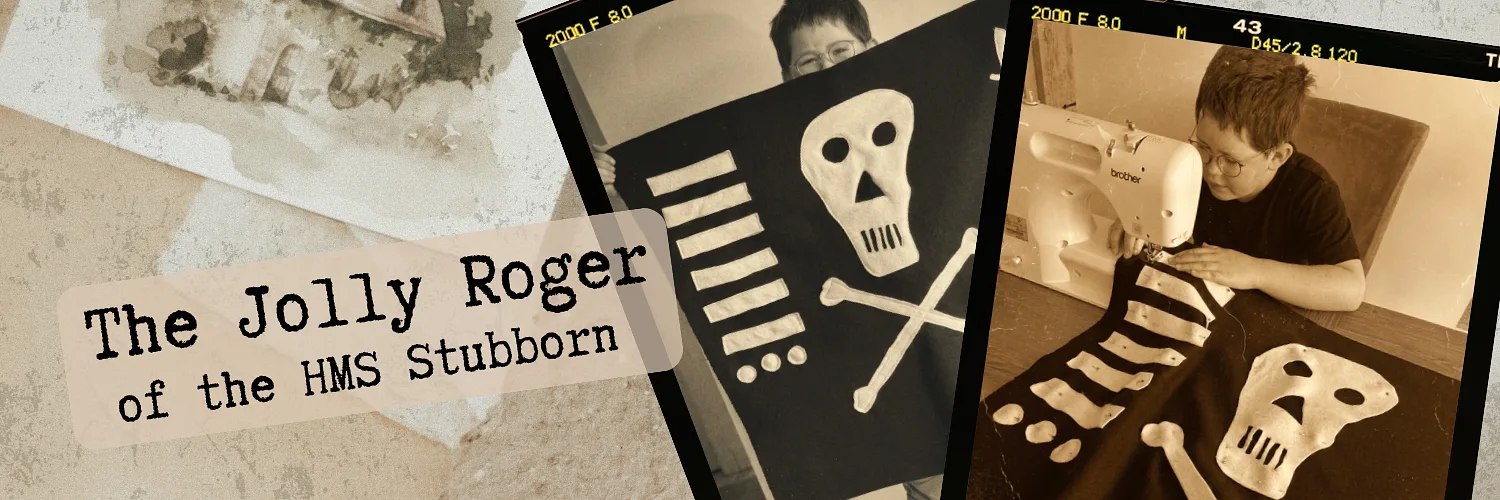
(Royal Navy Submarine Service – WWII)
Why Submarines Flew Pirate Flags
Jolly Roger flags were first used by British submarines in World War I. Admiral Sir Arthur Wilson, the First Sea Lord, once said submarines were “underhanded, unfair, and damned un‑English,” and that their crews should be hanged like pirates. Submariners responded with humour and pride: after a successful mission, they raised a pirate flag to show they were anything but ashamed of their work.
At first, each mission got its own flag. But as patrols increased, crews began stitching symbols onto a single Jolly Roger to record everything their submarine had achieved.
HMS Stubborn’s Jolly Roger
My replica shows the symbols carried by HMS Stubborn, where my great‑grandfather served as a Stoker 2nd Class in the Royal Navy Submarine Service.
Symbols and Their Meanings:
| Symbol | Meaning |
| Skull and Crossbones (centre) | Traditional submarine emblem, claiming the pirate insult with pride. |
| 6 White Bars (left) | Torpedo attacks that successfully sank enemy ships, usually merchant vessels. Each bar marks one confirmed sinking. |
| 3 White Circles (below bars) | Likely represent ships damaged, successful patrols without confirmed sinkings, or other non‑torpedo actions such as mine‑laying. |
| Dagger with Red Tip (top right) | A “cloak‑and‑dagger” mission, covert operations like landing commandos or intelligence work. The red tip suggests danger or combat during the mission. |
A Family Connection
This flag honours the service of my great‑grandfather and the whole crew of HMS Stubborn, who carried out dangerous underwater missions with courage, skill, and a sense of humour strong enough to turn an insult into a badge of honour.